
Vienna · Neubau · The atelier
Our Atelier & Shop
We make your bags here in front of your eyes. Our collection in the Atelier is different from the ones in our onlineshop. More colours, more designs and one of a kind bags that are only available in our atelier & shop.

The space
A shop in front, a sewing room behind.
Our doors in the atelier in the 7th district are open. Transparent and fair production of handmade bags.
There is no factory floor and no separate showroom. The person who cuts a hide is often the same person who rings up the sale — and the bags on the shelf were made a few steps from where they are sold.


 Social Brand
 Sustainable Design
 Leftover Leather
 Local Production
 Ethical & Fair

The leather
Deadstock, sorted by hand.
Our leather is leftover stock the industry set aside. We buy these rests, sort them by hand, and let each hide decide what it becomes. Fabrics and buckles are European-made.
Because the material itself is limited, almost every bag is a small series or a one-of-a-kind piece.
- Leather
- European deadstock, sorted by hand
- Fabrics and buckles
- Made in Europe
- Every piece
- A small series, or one of a kind
How a bag is made
From a leftover hide to a bag with legs.
Every bag passes through the same four steps — all of them in this one room.
-
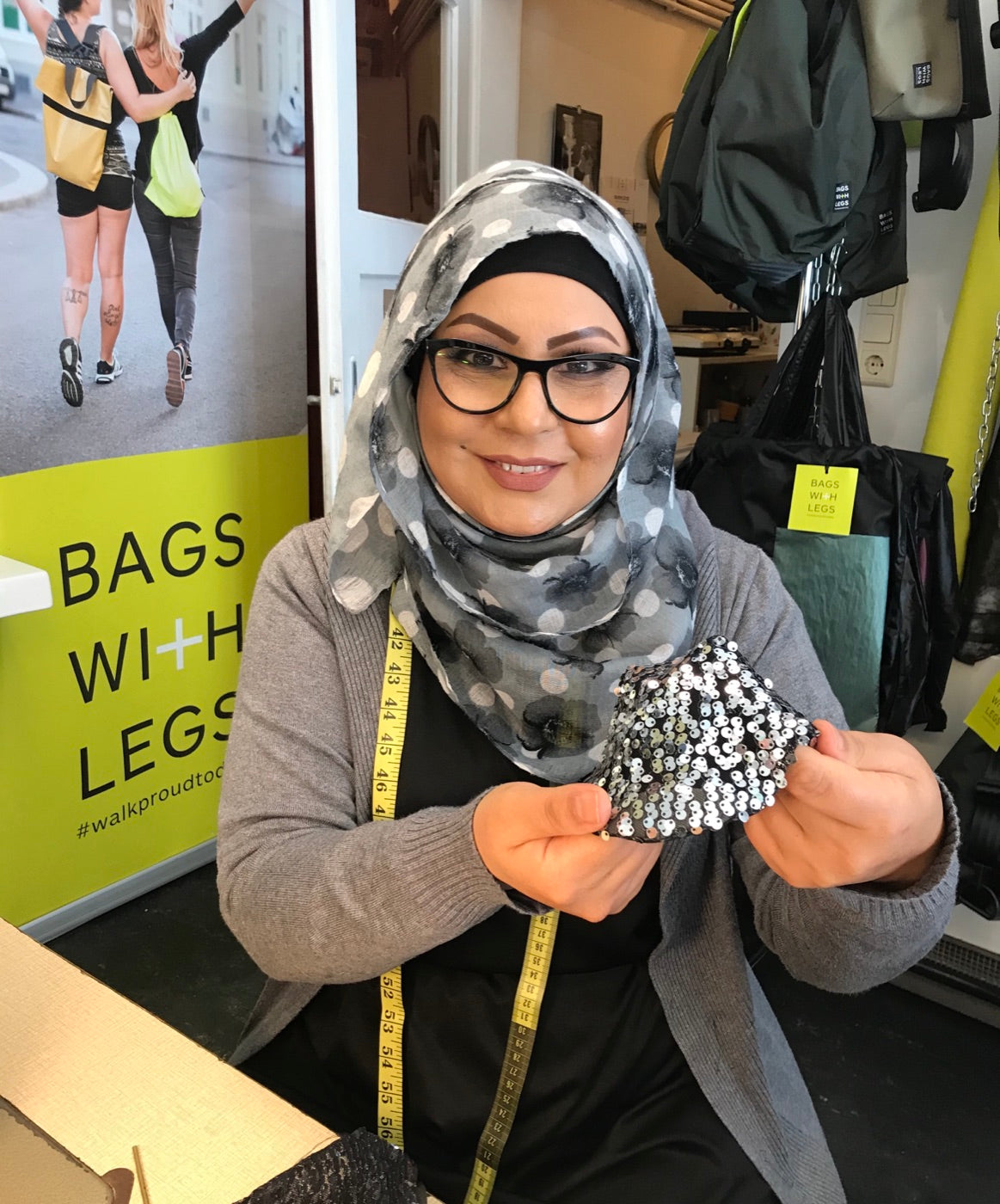
Choose the leather
Deadstock hides are bought in and sorted by hand. Each one is different — its size, grain and colour decide what it can become.
-
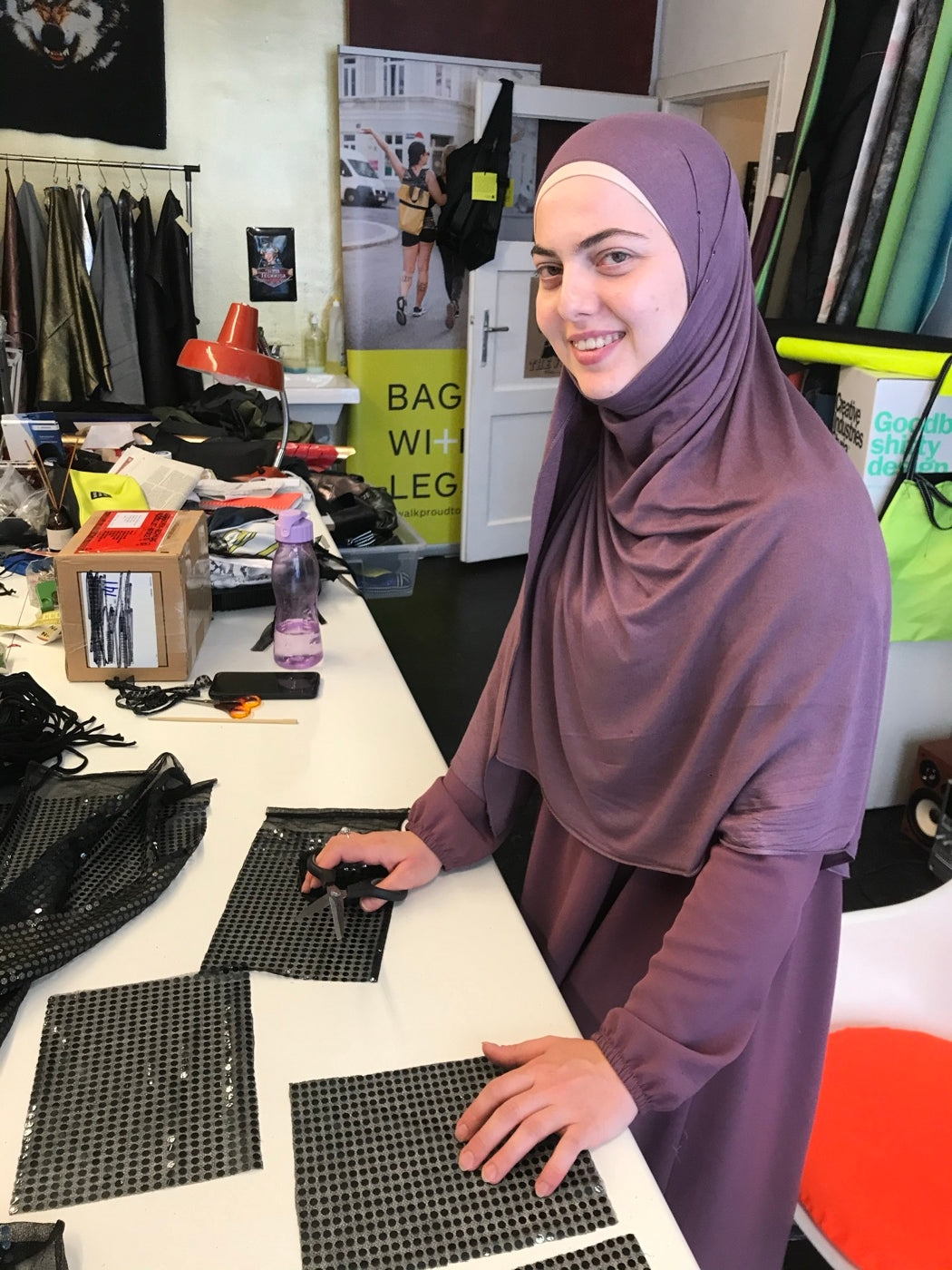
Cut the pattern
The pieces are marked and cut from the hide, matched with European fabrics for the lining and pockets.
-
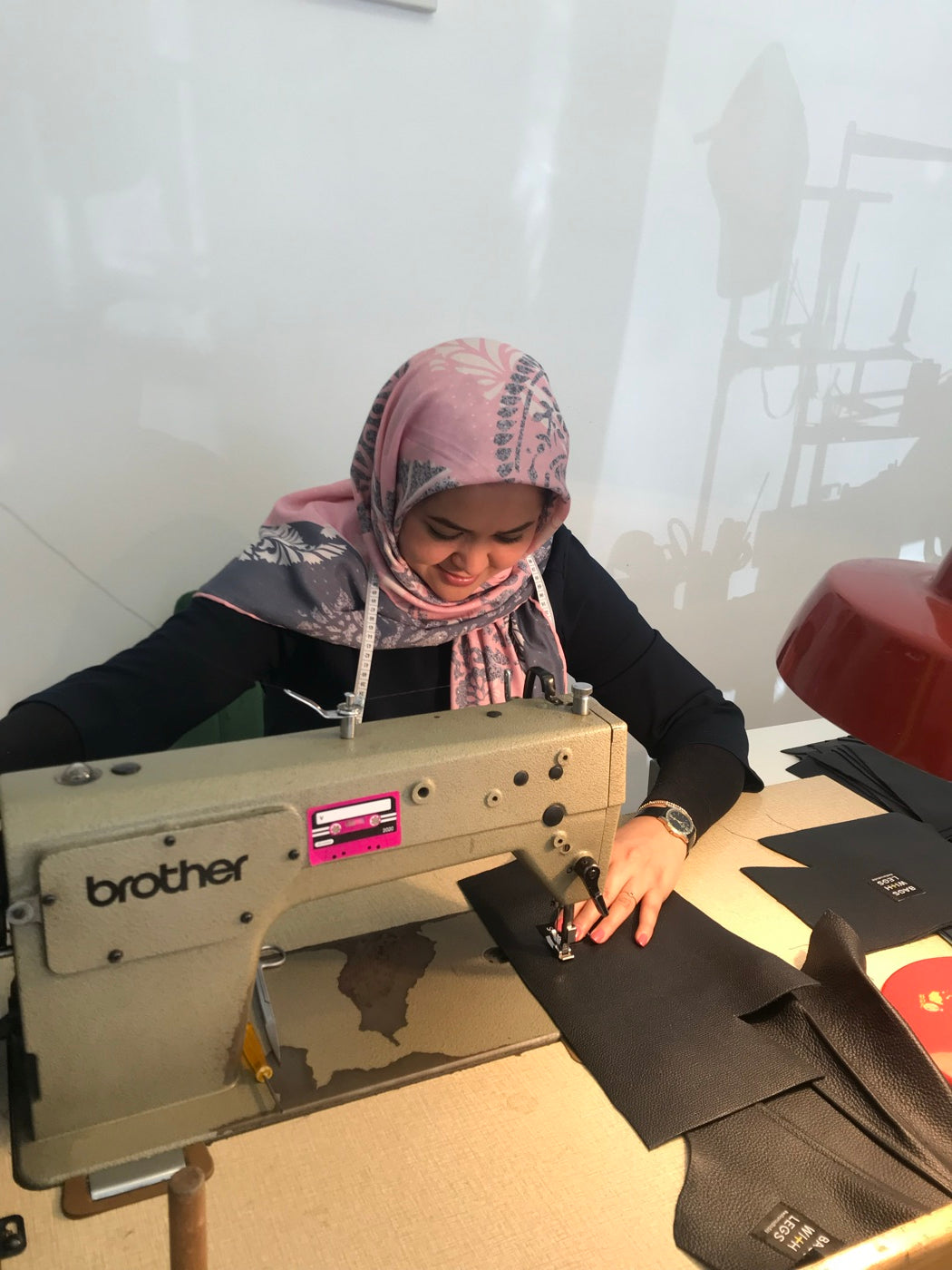
Sew by hand
Seams, lining and hardware come together at the machine — about six hours of handwork for a small bag, eight for a large one.
-
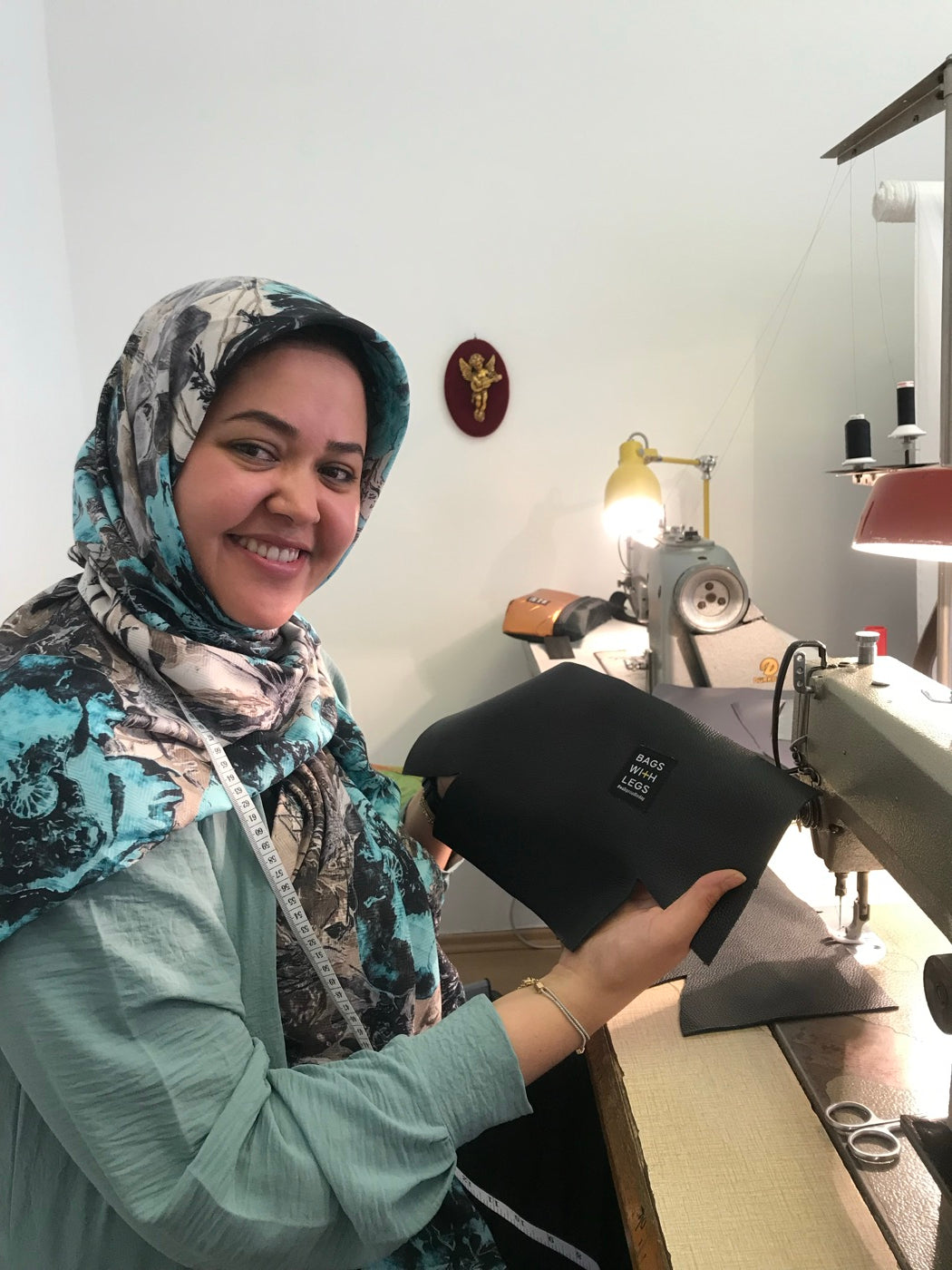
Hand it over
The finished bag is handed across the counter, often by the woman who made it.

The workroom
An ordinary day at the machines.
No staging and no factory — just the sewing room as it runs: threading one of the 1950s machines, sewing the next seam.
In Vienna
Hermanngasse19
The work
By hand, start to finish.
- 6 h
- Handwork in a small bag
- 8 h
- Handwork in a large bag
- 3
- Months of training
- 1950s
- Yes, our machines are from the fifties — durable and strong.
The sewing room is also the school: women with refugee and migrant backgrounds learn the craft here over about three months — cutting, sewing, design and the shop itself. One of them, Asilla, now makes the bags alongside Annamaria.
Read our story
Visit
The door is open.
- Atelier and shop
- Hermanngasse 19, 1070 Wien · Neubau, Austria
- Opening hours
-
Current opening times are kept up to date on Google Maps.
Open in maps - Repairs
-
We repair our bags ourselves.
Contact us - bagswithlegs@gmail.com